Walk the Block: The Science-Backed Case for a Daily Walking Ritual at 8 O’Clock.
Walking is the most accessible, low-impact way to feel better fast, and it scales to every age and fitness level. When we anchor a walk to the same time each day (8am or 8pm), the habit sticks, the health benefits compound, and the walk becomes part of everyday life.
Ready to start?
Join the global movement today. Walk at 8.
What you’ll discover
- The most significant physical and mental benefits of a daily walking routine.
- Why the "10,000 steps" rule is a myth, and how many steps actually matter.
- How the 8 o’clock ritual makes consistency effortless and enjoyable.
- A practical, actionable plan to start your walking habit today.
Walking: The “Perfect Exercise” for Everyone
Walking requires no gym membership, specialized skills, or expensive gear. It is gentle on the joints, easy to pace, and when done briskly, counts as the moderate-intensity aerobic activity recommended by major global health guidelines.[1][12] It is the foundational movement of the human body, optimized for endurance and overall well-being.
- Low barrier to entry: All you need are comfortable shoes and a safe route.
- Highly adaptable: Enjoy a leisurely stroll, push for a brisk pace, or add short intervals.
- Habit-friendly: Walking at the exact same time daily—like 8 o'clock—creates an automatic, frictionless routine.
- Simple targets: Walking every day at your own pace and growing toward the recommended 150 minutes per week yields massive health dividends.[1]
The Physical Science: Benefits That Compound
The physical transformations triggered by regular walking are profound. The science is incredibly clear on how movement impacts our longevity, metabolism, and cardiovascular system.
- Heart & Circulation: Brisk walking strengthens the heart muscle, helps lower blood pressure, and improves cholesterol profiles. It remains one of the simplest paths to robust cardiovascular health.[3]
- Metabolism & Blood Sugar: A short walk following a meal can significantly blunt glucose spikes. Recent clinical evidence demonstrates that a 10- to 30-minute post-meal walk meaningfully improves postprandial glycemia—an approachable habit with an outsized metabolic payoff.[9][10]
- Bones, Joints & Mobility: As a weight-bearing yet low-impact activity, walking supports bone density and joint health without the excessive wear-and-tear of high-impact workouts. Regular moderate walking also builds lower-body strength and functional balance, critical factors for maintaining independence as we age.[12]
"A walk following a meal can significantly blunt glucose spikes. Evidence demonstrates that an easy post-meal walk meaningfully improves metabolic health."
The Mental Science: Mood, Sleep, and Creativity
Walking isn't just about moving the body; it is one of the most effective ways to clear the mind.
- Sharper Thinking & Creativity: A landmark study from Stanford University found that walking boosts creative output by an average of 60% compared to sitting.[8] Taking your ideas on the road is a proven method for problem-solving and generating new perspectives.
- Better Sleep: Meta-analyses of exercise interventions reveal that walking consistently improves both subjective sleep quality and objective sleep duration.[11] The natural rhythm of walking helps regulate our internal clocks.
- Mood & Stress Relief: A single walk can immediately lift your mood and diffuse acute stress. Over time, the consistency of the habit compounds these effects through sustained endorphin release and a better daily cadence.
The Step Myth: How Much Walking Actually Moves the Needle?
You do not need to hit the magical "10,000 steps" number to unlock extraordinary health benefits. The 10,000-step target originally emerged from a 1960s marketing campaign, not a medical laboratory.
Large-scale cohort studies published in JAMA demonstrate that higher daily step counts are indeed associated with lower all-cause mortality, but the most meaningful risk reductions occur well below 10,000 steps.[4] Moving from a sedentary baseline of 2,000–3,000 steps up to 6,000–8,000 steps per day delivers the most significant relative health returns.[6][7]
The Practical Takeaway: Walk once or twice a day, every day, at your own pace. The steps add up on their own.
The 8 O’Clock Ritual: A Tiny Structure for Sticky Habits
Rituals consistently outperform sheer willpower. By anchoring your walk to a specific time—8 AM or 8 PM—you eliminate decision fatigue. When the clock strikes eight, you grab your shoes and go.
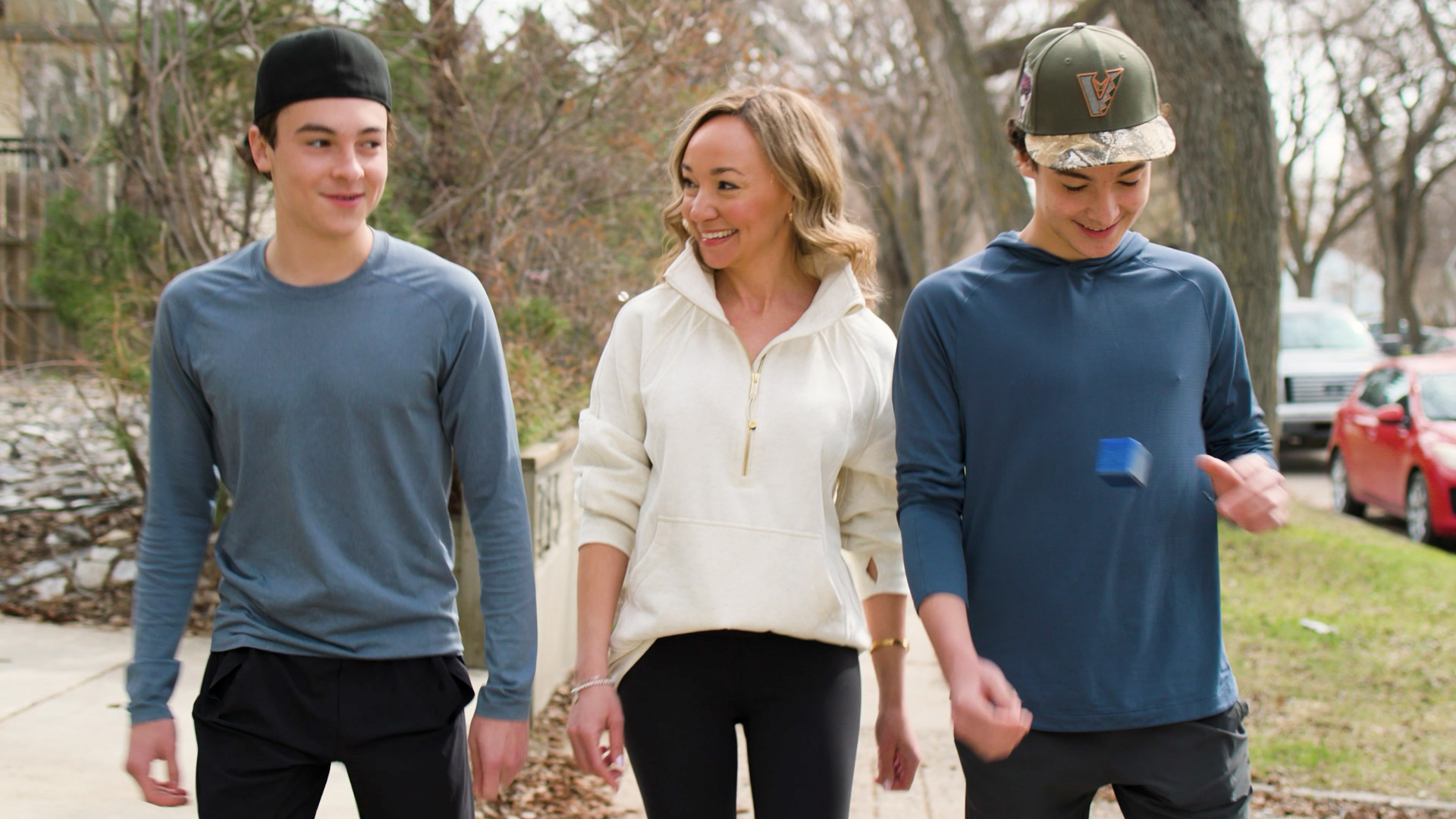
Carrying your physical "BLOCK" acts as a joyful visual cue and a natural conversation starter. When neighbors see you out at the same time, communities begin to form. Walking transforms from an isolated exercise into shared connection.[13]
Three Plug-and-Play Routines
Choose one to start today:
- The Easy Reset: Out the door at an easy pace. Focus on your breathing. Add two 30-second brisk pushes if you feel energetic.
- The After-Meal Walk: Ideal for 8 PM after dinner. Walk out, then loop back home at a comfortable pace to help steady your blood sugar.
- The Social Loop: Perfect for an 8 AM weekend start. Invite a friend, keep a conversational pace, and end with a photo to celebrate your streak.
Scientific References
- Centers for Disease Control and Prevention (CDC). Physical Activity Guidelines for Adults. View Source
- CDC. What Counts as Physical Activity. View Source
- Harvard T.H. Chan School of Public Health. Walking: The Nutrition Source. View Source
- JAMA (2020). Association of Daily Step Count and Step Intensity With Mortality Among US Adults. View Source
- JAMA Network Open (2023). Association of Daily Step Patterns With Mortality in US Adults. View Source
- Harvard T.H. Chan. Far fewer than 10,000 steps per day can boost health. View Source
- Harvard T.H. Chan. Daily steps, even if well under 10,000, can reduce risk of early death. View Source
- Stanford University (2014). Stanford study finds walking improves creativity. View Source
- Nutrients (2022). The Effects of Postprandial Walking on the Glucose Response. View Source
- Sports Medicine (2022). The Acute Effects of Interrupted Sitting on Cardiometabolic Risk Markers. View Source
- Sleep Medicine Reviews (2021). Exercise improves sleep quality: A systematic review and meta-analysis. View Source
- World Health Organization (WHO). Physical Activity Fact Sheet. View Source
- WHO. Promoting walking, cycling and other active mobility. View Source